

How Music Learning Works for Non-Instrumentalists
Non-instrumentalists can learn music effectively through listening, repetition, and structured choir environments.
Chinedu Knight
1/9/2026


How music learning works for non-instrumentalists is often misunderstood. Many beginners assume they must play the piano or read notation before they can learn music. In practice, this belief causes unnecessary fear. Music learning works very effectively for non-instrumentalists, especially in choir environments.
After many years of training singers with no instrumental background, I can state this clearly. Non-instrumentalists do not learn music poorly. They simply learn music differently.
Music Learning Does Not Depend on Instruments
Music does not live inside instruments. Instead, music lives in sound, movement, and structure. While instruments can support learning, they are not a requirement.
Non-instrumentalists learn music through listening and response. They hear patterns. They repeat sounds. Over time, recognition replaces confusion. Because of this, many singers develop strong musical awareness without touching an instrument.
This foundation connects directly to understanding music from zero, where mindset matters more than tools.
How Music Learning Works in Practice for Singers
For non-instrumentalists, music learning works in clear stages. First, singers learn to hear pitch direction. They notice when notes rise or fall. Next, they internalize rhythm through repetition and counting. Gradually, musical patterns become familiar.
Rather than starting with complex notation, singers absorb music through:
- Call and response
- Sectional rehearsals
- Vocal demonstration
- Repeated listening
As a result, learning feels natural instead of overwhelming. Later, singers can connect sounds to symbols, which is explained further in basic musical elements explained simply.
Why Choir Settings Support Non-Instrumentalists
Choirs provide structure. A conductor sets tempo and pitch. Section leaders reinforce accuracy. Meanwhile, repetition strengthens memory.
Because of this environment, non-instrumentalists often progress faster than expected. They focus on sound, blend, and timing instead of mechanics. Consequently, they become attentive listeners and disciplined singers.
However, many beginners still fear they are behind. These concerns appear often and are addressed directly in common beginner fears and misconceptions.
What Non-Instrumentalists Should Focus On First
At the beginning, theory is not the priority. Awareness is. Non-instrumentalists should focus on listening well, matching pitch, keeping steady rhythm, and following direction. Once these skills settle, theory becomes easier and more meaningful. This order matters greatly, which is why what beginners should learn first is essential reading.
Moving Forward with Confidence
How music learning works for non-instrumentalists proves one important truth. Music is human before it is technical. Singing trains the ear, the voice, and the mind together.
You do not need an instrument to begin. Instead, you need patience, consistency, and proper guidance. That is how most choristers start, and how they succeed.
Keep learning with these articles
Chinedu Knight • Feb 16, 2026
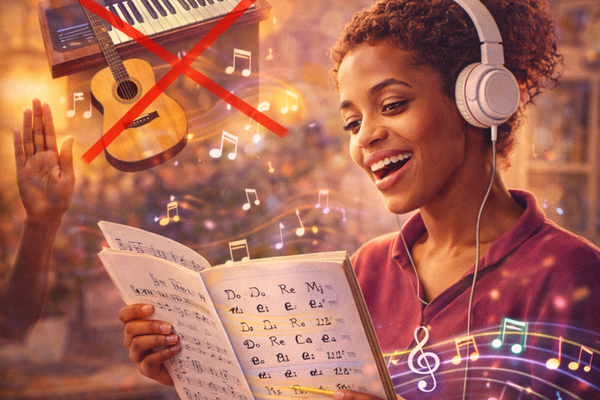
Can You Learn Music Without Playing an Instrument?
Yes, you can learn music without piano or guitar. Here’s how singers and choristers can grow using just their voice and smart tools.

Chinedu Knight • Feb 16, 2026
What Is Music Theory? A Simple Explanation for Singers
A simple explanation of music theory for singers and choristers, without the confusing jargon.
Chinedu Knight • Feb 11, 2026
How to Become a Chorister: From Beginner to Confident Choir Singer
Step-by-step guide on how to become a chorister and grow from nervous beginner to confident choir singer.