

How to Learn Music from Scratch: A Step-by-Step Guide for Beginner
A simple step-by-step guide for learning music from zero, especially for new choir singers.
Chinedu Knight
2/16/2026
How to Learn Music from Scratch: A Step-by-Step Guide for Beginners


A lot of people secretly want to “learn music,” but what they really mean is:
“I don’t want to be lost when the choir starts singing.”
If that’s you, this guide is for you.
It’s especially for:
- People who can sing along by ear but don’t understand what they’re singing
- New choristers who feel confused when they see tonic solfa or notation
- Adults who think it’s “too late” to start learning properly
Good news: it is not too late, and you don’t have to learn everything at once.
We’ll keep it practical and choir-focused.
What Does “Learning Music from Scratch” Really Mean?
Learning music from scratch does not mean:
- Becoming a concert pianist
- Studying thick theory books
- Memorising fancy Italian terms
For a chorister or church singer, “from scratch” usually means:
- Understanding high vs low notes
- Recognising basic movement like Do, Re, Mi
- Being able to feel and count beat
- Knowing how to practice a song on your own, not only in rehearsal
If you can do those four things, you are no longer “lost.”
You are learning music.
Step 1 – Start With Your Ears, Not the Page
Before any symbols or solfa, music is sound.
Pick one simple hymn or choir song you like. For a few days:
- Listen to it attentively, not as background noise
- Hum along with the main melody
- Try to notice:
- Where the melody feels like “home” (the place it likes to settle)
- Where it climbs (higher) and falls (lower)
You are training your ear to notice movement, not just enjoy sound.
If your ear is asleep, all the theory in the world will feel like punishment.
Wake the ear first.
Step 2 – Understand Basic Pitch: High and Low
You don’t need note names yet. Start with high vs low.
- Sing a comfortable note and hold it
- Slide your voice higher (like a gentle siren)
- Then slide lower (like a deep “hmm”)
That’s pitch.
In choir terms:
- Higher notes often sit in Soprano / Tenor space
- Lower notes often sit in Alto / Bass space
Mini exercise:
- Pick a short line from a hymn
- Sing it once in a comfortable range
- Sing it slightly higher
- Sing it slightly lower
You’re teaching your brain:
“Music moves on purpose. It’s not random.”
Step 3 – Meet Tonic Solfa (Just the Basics)
Now we give simple names to those movements.
Tonic solfa uses these seven main syllables:
Do – Re – Mi – Fa – So – La – Ti – (Do at the top again)
At this stage, you don’t need to understand keys or modulation. Your goal is simply:
- Sing them in order going up:
Do Re Mi Fa So La Ti Do - Sing them in order going down:
Do Ti La So Fa Mi Re Do
Do this slowly, without forcing your voice.
A simple daily drill:
- Pick one comfortable starting note
- Sing Do → Do’ (up and down) a few times
- Focus on remembering the order and keeping it smooth
🧩 When you’re ready to go deeper into how solfa is written, rhythm signs, fi/se/ta and more, read the dedicated article
“What Is Tonic Solfa? A Simple Guide for New Choristers” on the ChoirScript blog.
This “from scratch” guide is your roadmap; that article is your detailed solfa manual.
Step 4 – Learn to Feel and Count Beat
Music has two main sides:
- Pitch – how high or low
- Rhythm / beat – when it happens
Many beginners can copy pitch but get lost in timing.
Start by feeling the beat:
- Put on a hymn or choir song
- Clap or tap your leg steadily to the pulse
- Say out loud: “1 – 2 – 3 – 4” with your claps
- Notice where the words land on those counts
Then learn basic long vs short:
- Some notes feel quick, some held, some very long
- You don’t need names like “crotchet” yet; just notice length
Simple exercise:
- Take one line of lyrics
- Clap a steady beat
- Speak the words in rhythm while clapping
You’re telling your body:
“Music moves in a pattern, not in chaos.”
Step 5 – Connect Solfa and Beat to Real Songs
Theory only becomes real when you attach it to actual music.
Pick one very simple hymn with tonic solfa written out (for example, from ChoirScript).
Practice in small pieces:
- Listen to the melody a few times
- Clap the beat while listening
- Sing the melody on “La” only (no words, no solfa yet)
- Then sing the same line using solfa (Do Re Mi…)
- Finally sing with the real words, but feel the solfa and beat underneath
Don’t attack the whole song at once. Use:
- First line only
- Then first two lines
- Then a verse and chorus over a few days
You are slowly connecting:
Ear → Solfa → Beat → Real song
This is where having clean ChoirScript scores makes life easier.
You’re not guessing blindly; you can see what you’re hearing.
Step 6 – Build a Simple Weekly Practice Plan
To learn from scratch, you don’t need 2 hours every day.
You need 10–20 focused minutes, a few times a week.
Example beginner plan (3 days a week):
Day 1, 2, 3 (e.g. Mon, Wed, Sat)
- 5 minutes – Solfa warm-up
- Do Re Mi Fa So La Ti Do (up and down)
- Start on a note that feels comfortable
- Some days start a bit higher, some days lower
- 5–10 minutes – One simple song
- Clap the beat while listening
- Sing the melody on “La”
- Sing the first line in solfa
- Then sing with words
- 3–5 minutes – Quiet listening
- Play the same song
- Follow the solfa or lyrics with your eyes
- Notice high vs low and where the phrases “breathe”
If you stayed at this level for 2–3 months, you’d feel a huge difference in confidence.
Step 7 – Learn Gradually, Not All at Once
This is where many beginners fall off:
they try to understand everything in one evening, get overwhelmed, and conclude:
“Music is too hard for me.”
Instead, think in layers:
- Layer 1: Ear
- Listening, humming, recognising higher/lower
- Layer 2: Simple solfa
- Do Re Mi, small steps, basic patterns
- Layer 3: Beat
- Feeling pulse, clapping, long vs short notes
- Layer 4: Real songs
- Applying all of the above slowly to actual choir music
- Layer 5: Deeper theory
- When you’re ready, reading more about keys, fi/se/ta, etc. in articles like “What Is Tonic Solfa?” and beyond
You don’t need to “master” one layer before touching the next, but you should know which layer you are practising in that moment.
Music is like language:
you heard it first, then spoke it, then eventually read and wrote it.
Common Questions from Total Beginners
“Am I too old to start learning music?”
No. You may not become a child prodigy, but you can absolutely become:
- A confident chorister
- Someone who understands what they’re singing
Adults often learn faster because they’re more intentional.
“What if my voice is not beautiful?”
Music learning is about control and understanding, not just natural beauty.
With simple, consistent practice:
- Pitch control improves
- Tone becomes steadier
- You stop guessing and start knowing
The choir needs accurate, reliable singers far more than it needs “perfect” voices.
“Do I have to learn staff notation, or can I stick with solfa?”
In many choirs, tonic solfa alone is enough to:
- Learn your part
- Sing harmony
- Understand melodic movement
Staff notation is an excellent next step, but you don’t have to learn both at the same time. Start where your choir and your brain are.
“How long until I stop feeling lost?”
If you practice 10–20 minutes, 3 times a week, you can expect:
- After 1 month: less confusion, more recognition of patterns
- After 3–6 months: you follow solfa and beat more confidently in rehearsal
- After 1 year: you feel like a proper chorister, not a visitor
Consistency beats talent every time.
How ChoirScript Helps You Learn Faster
When you’re starting from scratch, the hardest questions are:
- “What should I practise?”
- “How do I know if I’m singing the right thing?”
Platforms like ChoirScript help by giving you:
- Clean tonic solfa notation for real choir songs
- Lyrics lined up with solfa, so you see how they match
- Pieces categorised by use, so you can start with simpler songs
- Scores you can revisit at home between rehearsals
Instead of relying only on memory or shaky recordings, you can:
- Open a ChoirScript score
- Clap the beat
- Sing through the solfa slowly
- Then add the words
- Arrive at rehearsal already familiar with the song
You become the chorister who comes prepared, not the one who is always guessing.
Final Thoughts: Start Small, Stay Consistent
Learning music from scratch is not reserved for “talented people.”
It’s for anyone willing to take small, repeated steps:
- Wake your ears
- Learn basic Do Re Mi
- Feel the beat
- Attach everything to real songs
- Use simple tools like ChoirScript to guide you
If you haven’t yet, pair this guide with:
- “What Is a Choir? Structure, Purpose, and How Choirs Function”
- “What Is a Chorister? Meaning, Role, and Responsibilities Explained”
- “What Is Tonic Solfa? A Simple Guide for New Choristers”
Then pick one song, one scale, and start today.
Your future self – and your choir – will thank you. 🎶
Keep learning with these articles

Benedictine Nativity Abbey, Umuahia • May 22, 2026
Benedictine Nativity Abbey, Umuahia: A Story of Prayer, Work, and Monastic Witness
A profile of Benedictine Nativity Abbey, Umuahia, its history, prayer life, work, growth, and monastic witness.
Chinedu Knight • Apr 01, 2026
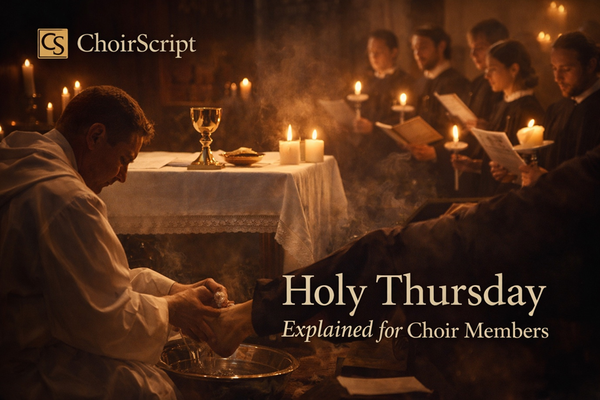
Holy Thursday Explained for Choir Members: The Mass of the Lord’s Supper
A simple guide to Holy Thursday for choir members and psalmists, explaining the Mass of the Lord’s Supper, the washing of feet, the Eucharist, and the transfer of the Blessed Sacrament.
Chinedu Knight • Apr 01, 2026
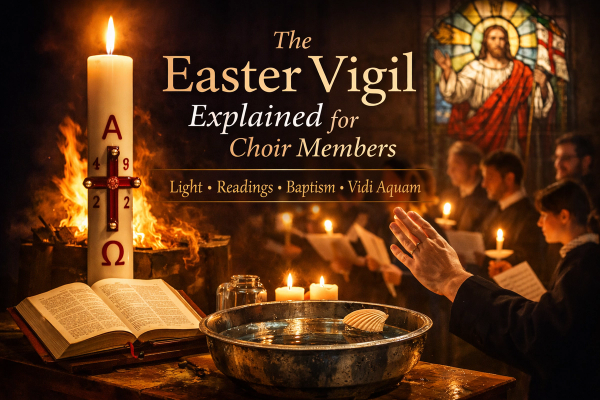
The Easter Vigil Explained for Choir Members: Light, Readings, Baptism, and Vidi Aquam
A simple guide to the Easter Vigil for choir members, psalmists, and cantors who want to understand what this great liturgy means.